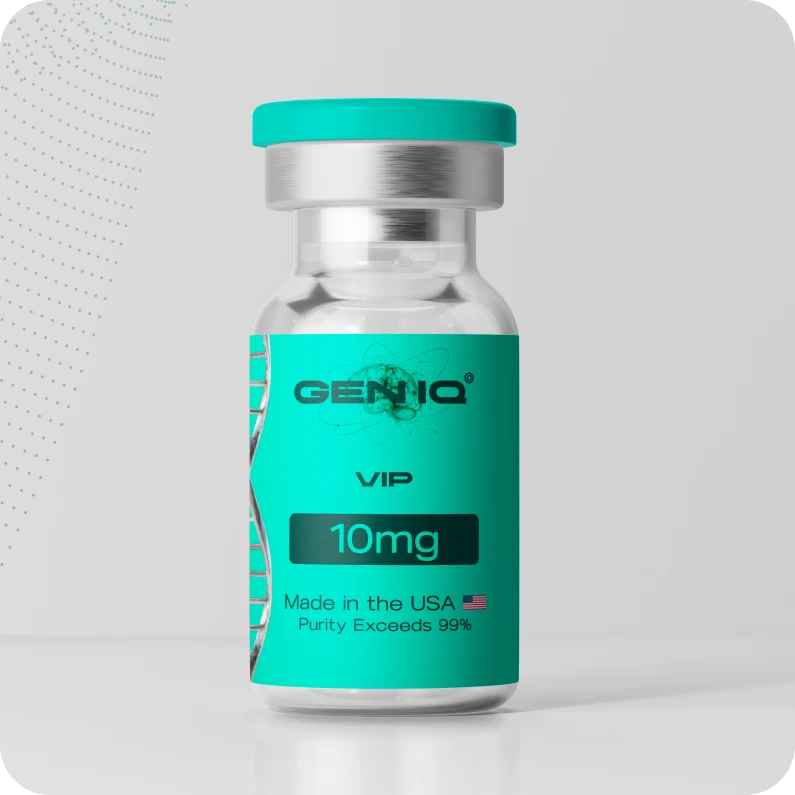
Vip (10mg)
For Research Use Only — Not for Human Use
Intended for laboratory research use only (e.g., analytical and in-vitro studies). Not for human use.
VIP (Vasoactive Intestinal Peptide) is a naturally occurring neuropeptide composed of 28 amino acids. It is widely studied in molecular biology, neuroendocrine signaling, and immune-system research due to its role in cellular communication and receptor-mediated signaling pathways.
VIP interacts with specific G-protein–coupled receptors (VPAC1 and VPAC2), which are distributed throughout the nervous system, gastrointestinal tract, and immune tissues. Because of these interactions, VIP is frequently examined in studies involving neurotransmission, inflammatory signaling, and smooth muscle regulation.
GENIQ supplies VIP strictly for laboratory research only—not for human or animal use.
$199.99

-
 Official retailer
-
Quality guaranteed

-
Free delivery from $99
-
Free returns is available
What Is VIP?
VIP (Vasoactive Intestinal Peptide) is a naturally occurring neuropeptide composed of 28 amino acids. It is widely studied in molecular biology, neuroendocrine signaling, and immune-system research due to its role in cellular communication and receptor-mediated signaling pathways.
VIP interacts with specific G-protein–coupled receptors (VPAC1 and VPAC2), which are distributed throughout the nervous system, gastrointestinal tract, and immune tissues. Because of these interactions, VIP is frequently examined in studies involving neurotransmission, inflammatory signaling, and smooth muscle regulation.
GENIQ supplies VIP strictly for laboratory research only—not for human or animal use.
Peptide Overview
VIP is an important signaling peptide involved in numerous physiological communication pathways.
In controlled laboratory environments, researchers examine how VIP may promote changes in:
| Neurotransmitter signaling and neuronal communication |
| Smooth muscle relaxation pathways |
| Immune-system signaling and cytokine regulation |
| Gastrointestinal neuroendocrine activity |
| Vasodilation-related biochemical mechanisms |
| Cellular communication through GPCR receptor systems |
| Inflammatory and anti-inflammatory signaling pathways |
| All findings originate exclusively from experimental research environments. |
All findings remain limited to preclinical and in-vitro experimental environments.
History of VIP
Vasoactive Intestinal Peptide was first isolated in the early 1970s from intestinal tissue during research investigating gastrointestinal hormone regulation.
Scientists later discovered that VIP is widely distributed throughout the nervous system and functions as both a neurotransmitter and neuromodulator.
| Over time, VIP became an important subject in studies involving: |
| • Neuroendocrine signaling |
| • Gastrointestinal physiology |
| • Immune modulation pathways |
| • Vascular smooth-muscle regulation |
| • Circadian and neurological signaling systems |
| • Cellular receptor communication |
| Its broad biological distribution has made VIP a widely studied peptide in neuroscience, immunology, and physiology research. |
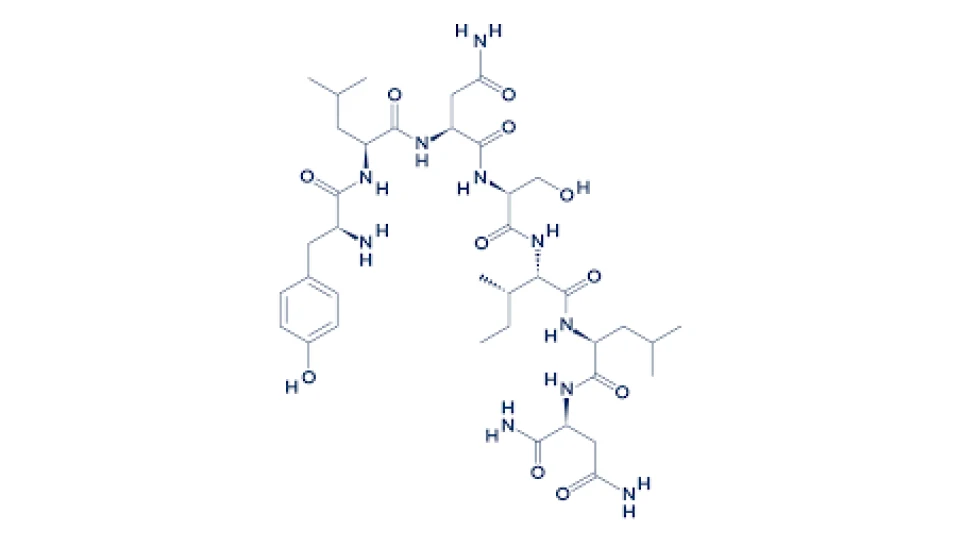
Peptide Structure
Sequence: HSDAVFTDNYTRLRKQMAVKKYLNSILN
Certificates of Analysis
VIP — 10mg
Research Findings
Research involving VIP commonly focuses on:
| Neurotransmitter signaling: Studies examine VIP’s role in neuronal communication and neuromodulation. |
| Immune-system pathways: Researchers analyze cytokine regulation and immune-cell signaling influenced by VIP. |
| Smooth muscle regulation: Laboratory models investigate biochemical pathways associated with smooth-muscle relaxation. |
| Vascular signaling: Studies explore VIP’s involvement in vasodilation-related mechanisms. |
| Gastrointestinal research: VIP is studied in relation to gut–brain signaling and neuroendocrine regulation. |
| Receptor-mediated pathways: Research examines VIP interaction with VPAC receptors and downstream signaling effects. |
| These findings are limited to laboratory research environments and do not represent clinical outcomes. |
These findings reflect laboratory experiments only and do not indicate clinical outcomes.
References
2. Neuroendocrine Research Institute. “VIP signaling and receptor-mediated pathways.”
3. Immunology Signaling Laboratory. “Neuropeptide involvement in immune-cell communication.”
FAQ
Are GENIQ peptides pharmaceutical products?
No. They are not drugs, supplements, or therapeutic items. All compounds are provided strictly for laboratory research.
Who should purchase GENIQ research materials?
Qualified researchers, laboratories, and institutions working within applicable laws and regulations.
Do orders include COAs?
Yes. Each peptide includes a Certificate of Analysis confirming identity and purity testing when available for that lot.
What handling notes does GENIQ provide?
Only storage temperature and solvent-compatibility notes when listed on the product page. GENIQ does not provide guidance on preparation or application. Buyers follow their institution’s laboratory protocols.
Are these products for human use?
No. For Research Use Only — Not for Human Use. Not for human or animal consumption.
For Research Use Only — Not for Human Use
Sold exclusively as laboratory research materials. Not for human or animal consumption, clinical use, or household use.
Intended research use: Laboratory and in-vitro research, including analytical characterization and pathway / receptor-binding studies as applicable to this compound. Not for human consumption, clinical use, or diagnostic use on humans.
VIP (Vasoactive Intestinal Peptide) is a naturally occurring neuropeptide composed of 28 amino acids. It is widely studied in molecular biology, neuroendocrine signaling, and immune-system research due to its role in cellular communication and receptor-mediated signaling pathways.
VIP interacts with specific G-protein–coupled receptors (VPAC1 and VPAC2), which are distributed throughout the nervous system, gastrointestinal tract, and immune tissues. Because of these interactions, VIP is frequently examined in studies involving neurotransmission, inflammatory signaling, and smooth muscle regulation.
GENIQ supplies VIP strictly for laboratory research only—not for human or animal use.
RELATED PRODUCTS
Epithalon
$84.99 – $159.99Price range: $84.99 through $159.99