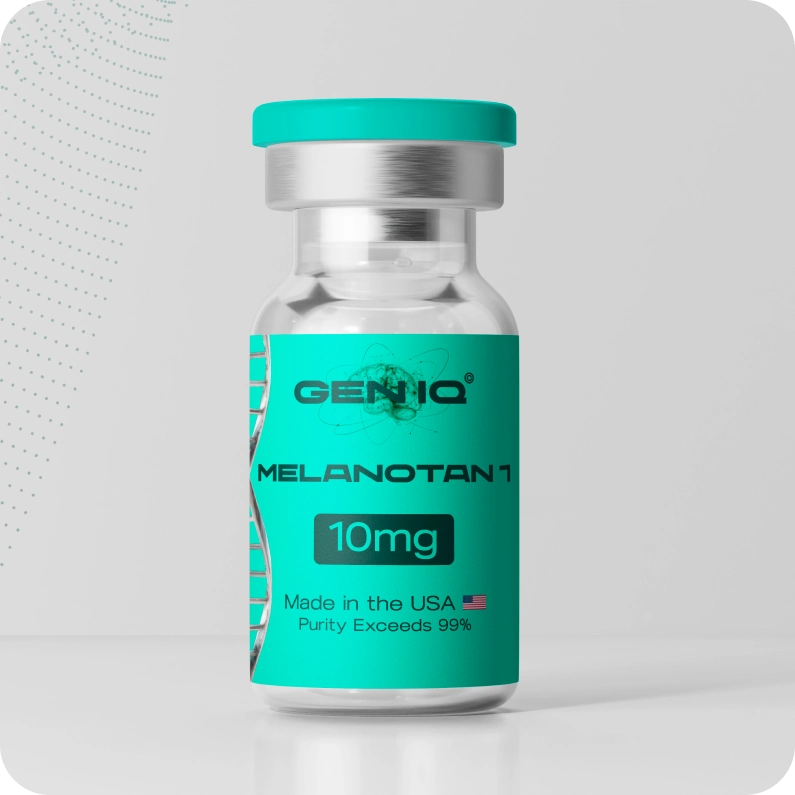
MT-1 Research Compound (10mg)
For Research Use Only — Not for Human Use
Intended for laboratory research use only (e.g., analytical and in-vitro studies). Not for human use.
MT-1 (also known as Afamelanotide’s research predecessor) is a synthetic analog of the alpha-melanocyte–stimulating hormone (α-MSH).
Researchers study MT-1 for its interactions with melanocortin receptors, pigmentation-related pathways, and signaling mechanisms involved in skin biology.
$79.99

-
 Official retailer
 -
Quality guaranteed

-
Free delivery from $99
-
Free returns is available
What Is MT-1?
MT-1 (also known as Afamelanotide’s research predecessor) is a synthetic analog of the alpha-melanocyte–stimulating hormone (α-MSH).
Researchers study MT-1 for its interactions with melanocortin receptors, pigmentation-related pathways, and signaling mechanisms involved in skin biology.
GENIQ supplies this compound strictly for laboratory research—not for human or animal use.
Peptide Overview
MT-1 is a stable, long-lasting peptide analog used in research to explore α-MSH–related biochemical activity.
In laboratory studies, MT-1 is frequently examined for its potential to promote changes in:
| • Melanocortin receptor (MC1R) activation |
| • Melanocyte signaling responses |
| • Pigmentation pathway modeling |
| • UV-response biochemical processes |
| • Anti-inflammatory signaling related to melanocortin pathways |
| • Skin and photobiology models |
| These findings reflect controlled experimental environments only. |
All findings remain limited to preclinical and in-vitro experimental environments.
History of MT-1
MT-1 originated from research into the melanocortin system, a regulatory network involved in pigmentation, inflammation, and skin-protection pathways.
Scientists developed synthetic variants of α-MSH to create stable, research-friendly molecules capable of extended receptor interaction.
This led to the identification of MT-1 as an analog with increased stability, allowing researchers to explore pigmentation and melanocyte-related signaling in a more consistent in-vitro environment.
The peptide continues to be an important tool in studies of MC1R biology, photoprotection pathways, and melanocyte behavior.
Peptide Structure
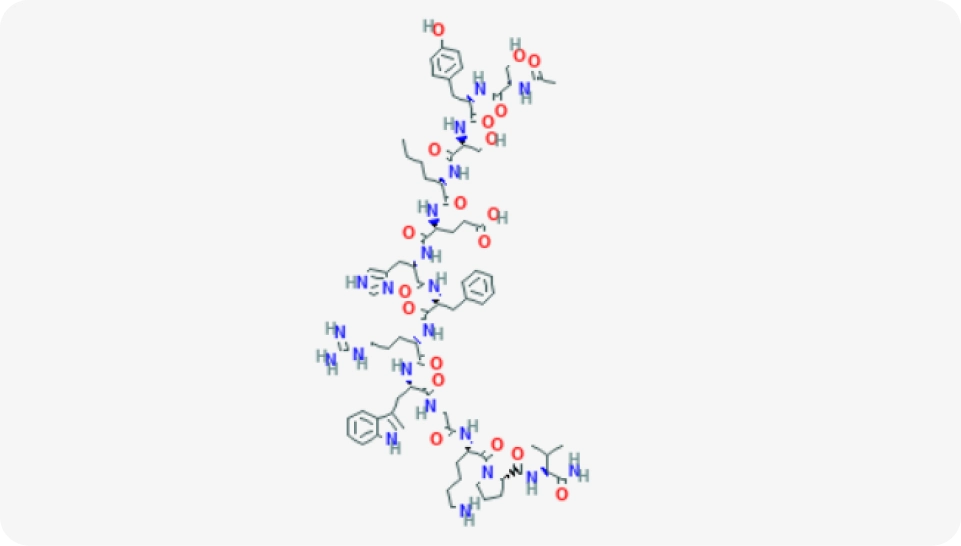
Sequence: Ac-Ser-Tyr-Ser-Nle-Glu-His-D-Phe-Arg-Trp-Gly-Lys-Pro-Val-NH₂
Certificates of Analysis
MT-1 — 10mg
Research Findings
MT-1 is widely used in studies exploring:
| • MC1R receptor activation: Research investigates how MT-1 interacts with melanocortin receptors responsible for pigment-related signaling. |
| • Melanocyte models: Studies observe changes in pigment-producing cells under controlled conditions. |
| • UV-protection pathways: Research examines biochemical responses associated with photoprotection and skin-defense signaling. |
| • Inflammatory regulation: Melanocortin peptides are known for their involvement in inflammation-related signaling pathways. |
| • Gene-expression behavior: Research explores how melanocortin activation influences gene regulation in skin and pigment-related systems. |
| These findings are limited to experimental laboratory settings. |
These findings reflect laboratory experiments only and do not indicate clinical outcomes.
References
2. Cone R., et al. “MC1R receptor signaling and α-MSH analog responses.” Journal of Molecular Dermatology.
3. Photobiology Research Unit. “Melanocyte responses to synthetic melanocortin peptides.”
FAQ
Are GENIQ peptides pharmaceutical products?
No. They are not drugs, supplements, or therapeutic items. All compounds are provided strictly for laboratory research.
Who should purchase GENIQ research materials?
Qualified researchers, laboratories, and institutions working within applicable laws and regulations.
Do orders include COAs?
Yes. Each peptide includes a Certificate of Analysis confirming identity and purity testing when available for that lot.
What handling notes does GENIQ provide?
Only storage temperature and solvent-compatibility notes when listed on the product page. GENIQ does not provide guidance on preparation or application. Buyers follow their institution’s laboratory protocols.
Are these products for human use?
No. For Research Use Only — Not for Human Use. Not for human or animal consumption.
For Research Use Only — Not for Human Use
Sold exclusively as laboratory research materials. Not for human or animal consumption, clinical use, or household use.
Intended research use: Laboratory and in-vitro research, including analytical characterization and pathway / receptor-binding studies as applicable to this compound. Not for human consumption, clinical use, or diagnostic use on humans.
MT-1 (also known as Afamelanotide’s research predecessor) is a synthetic analog of the alpha-melanocyte–stimulating hormone (α-MSH).
Researchers study MT-1 for its interactions with melanocortin receptors, pigmentation-related pathways, and signaling mechanisms involved in skin biology.
RELATED PRODUCTS
5-Amino-1MQ
$99.99 – $249.99Price range: $99.99 through $249.99
GHKCU / TALLOW Cream