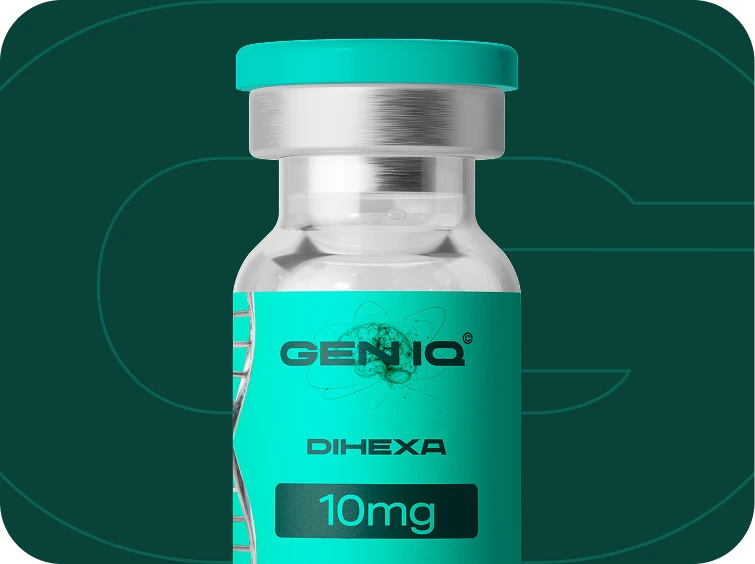
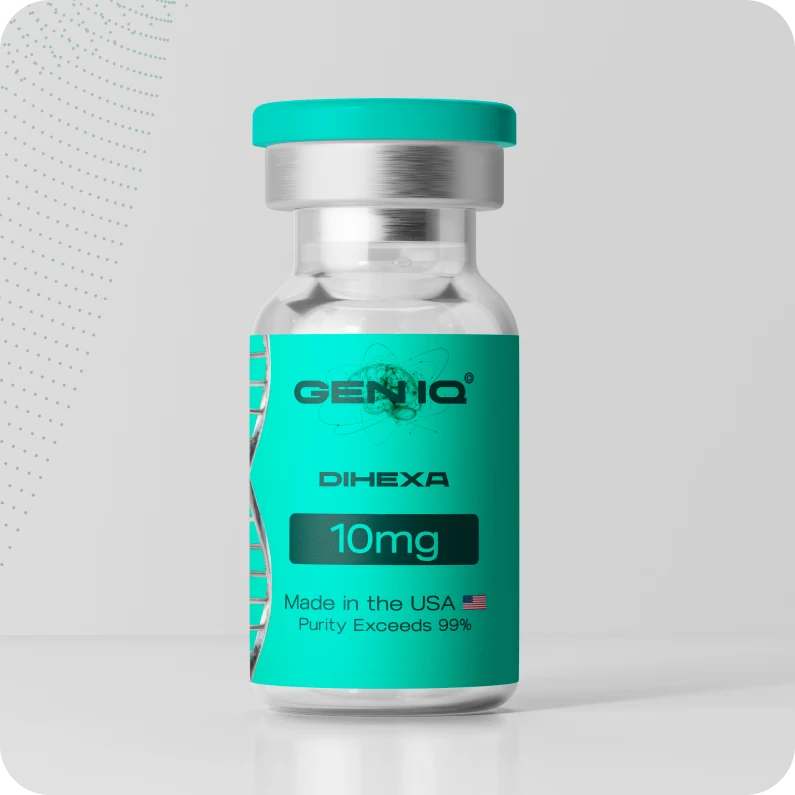



DIHEXA (10mg)

DIHEXA (N-Hexanoic-Tyr-Ile-(6) aminohexanoic amide) is a synthetic peptide-derived compound studied in neuroscience and synaptic signaling research. It is structurally related to angiotensin IV but was engineered to enhance stability and biological activity within laboratory models.

Researchers study DIHEXA primarily for its interaction with hepatocyte growth factor (HGF) and c-Met receptor signaling pathways, which are associated with synaptic connectivity and neural communication.

GENIQ supplies DIHEXA strictly for laboratory research only—not for human or animal use.

$249.99

Category:
  • Official retailer
  • Quality guaranteed
  • Free delivery from $99
  • Free returns is available

What Is DIHEXA?

DIHEXA (N-Hexanoic-Tyr-Ile-(6) aminohexanoic amide) is a synthetic peptide-derived compound studied in neuroscience and synaptic signaling research. It is structurally related to angiotensin IV but was engineered to enhance stability and biological activity within laboratory models.

Researchers study DIHEXA primarily for its interaction with hepatocyte growth factor (HGF) and c-Met receptor signaling pathways, which are associated with synaptic connectivity and neural communication.

GENIQ supplies DIHEXA strictly for laboratory research only—not for human or animal use.

Peptide Overview

DIHEXA is frequently studied in research focused on neurobiology, synaptic plasticity, and cellular signaling within the central nervous system.

In controlled laboratory environments, researchers examine how DIHEXA may promote changes in:

• Synaptogenesis-related signaling pathways
• Neuronal growth and connectivity markers
• Hepatocyte growth factor (HGF) receptor activity
• Neuroplasticity-associated gene expression
• Memory and learning molecular pathways
• Neural cell communication models
• Brain-derived signaling and structural protein activity
All observations originate exclusively from experimental research settings.

All findings remain limited to preclinical and in-vitro experimental environments.

History of DIHEXA

DIHEXA was developed during research aimed at modifying angiotensin IV analogs to create molecules capable of interacting with neural growth signaling pathways.

Scientists discovered that DIHEXA binds to hepatocyte growth factor (HGF), a protein involved in neuronal development and synaptic connectivity. Because of this interaction, DIHEXA became a compound of interest in studies involving:

• Synaptic formation and plasticity
• Neurodegenerative disease models
• Learning and memory mechanisms
• Neural growth signaling pathways
• HGF/c-Met receptor system interactions
• Brain cellular communication models
Research on DIHEXA continues to explore how growth-factor signaling influences neural structure and function.

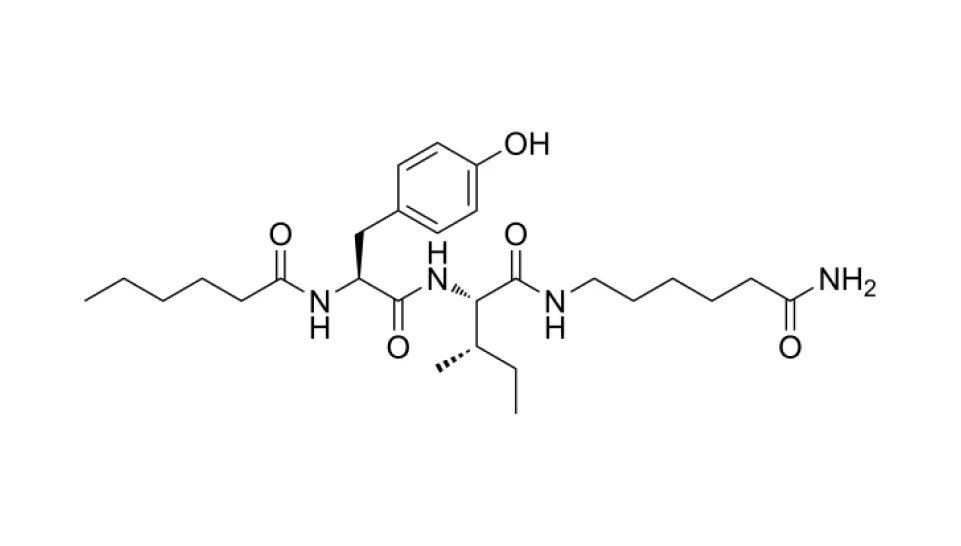
Peptide Structure

Chemical Name:
N-Hexanoic-Tyr-Ile-(6) aminohexanoic amide Derived From: Angiotensin IV analog

Certificates of Analysis

DIHEXA — 10mg

Research Findings

Research involving DIHEXA commonly focuses on:

• Synaptic formation signaling: Studies evaluate molecular pathways associated with new synapse development.
• HGF/c-Met receptor activity: Researchers investigate how DIHEXA interacts with hepatocyte growth factor signaling systems.
• Neuroplasticity markers: Laboratory models track biochemical changes related to neuronal connectivity and structural proteins.
• Memory and learning pathways: Experimental studies analyze cellular processes associated with cognitive signaling networks.
• Neuronal growth models: Research examines how peptides influence neural growth and structural organization.
• Gene-expression modulation: Investigations explore transcriptional activity related to neurodevelopmental pathways.
These findings are limited to laboratory research environments and do not represent clinical outcomes.

These findings reflect laboratory experiments only and do not indicate clinical outcomes.

References

1. Benoist C., et al. “Angiotensin IV analogs and synaptic plasticity.” Journal of Neuroscience Research.

2. Wright J.W., et al. “HGF receptor signaling in neural growth pathways.” Neurochemical Research.

3. Central Nervous System Laboratory. “Peptide-based modulation of synaptogenesis signaling.

4. Molecular Neurobiology Institute. “Angiotensin-derived peptides and neuronal communication models.”

FAQ

What type of research is DIHEXA used for?

DIHEXA is commonly used in studies involving synaptic plasticity, neuronal signaling, growth-factor pathways, and neurobiology research.

Yes. Every GENIQ compound includes a COA verifying identity and purity.

No. DIHEXA is not FDA-approved and is not intended for human or animal administration.

No. GENIQ does not provide any preparation or usage guidance.

Only trained researchers operating within controlled laboratory environments.

Research Use Only

All GENIQ compounds are intended strictly for laboratory research.
 Not for human or animal consumption, medical use, or therapeutic application.

Nothing in this document should be interpreted as medical advice or as approval for use outside controlled scientific environments.

DIHEXA (N-Hexanoic-Tyr-Ile-(6) aminohexanoic amide) is a synthetic peptide-derived compound studied in neuroscience and synaptic signaling research. It is structurally related to angiotensin IV but was engineered to enhance stability and biological activity within laboratory models.

Researchers study DIHEXA primarily for its interaction with hepatocyte growth factor (HGF) and c-Met receptor signaling pathways, which are associated with synaptic connectivity and neural communication.

GENIQ supplies DIHEXA strictly for laboratory research only—not for human or animal use.

RELATED PRODUCTS