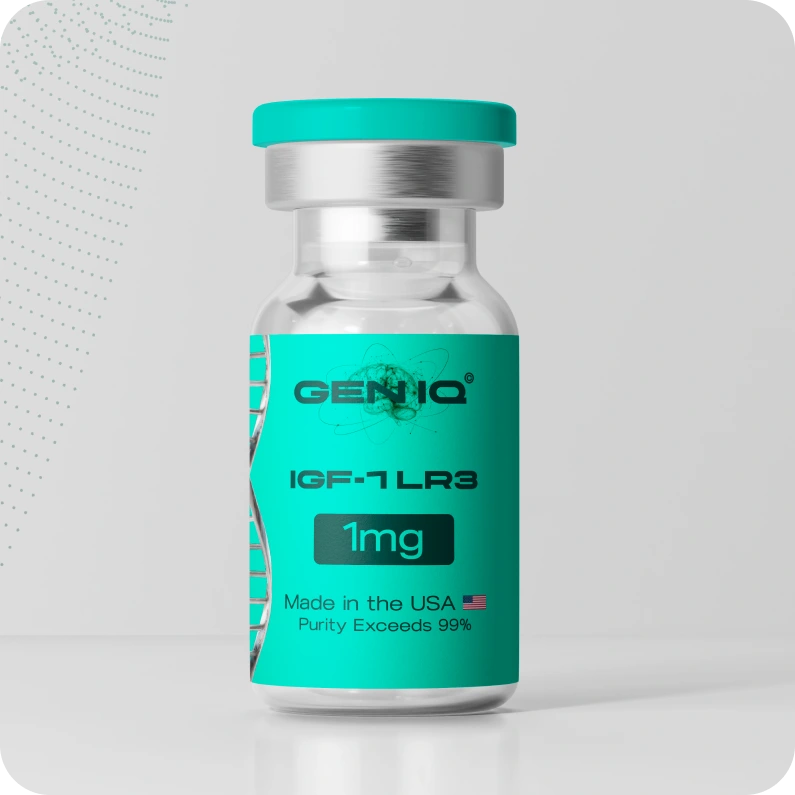
IGF-1 LR3 — 1mg
For Research Use Only — Not for Human Use
Intended for laboratory research use only (e.g., analytical and in-vitro studies). Not for human use.
IGF-1 LR3 (Insulin-Like Growth Factor-1 Long R3) is a modified analog of IGF-1 engineered to exhibit increased stability and extended activity in laboratory research environments.
It differs from native IGF-1 by the addition of an arginine substitution at position 3 and an extended peptide chain, enhancing its resistance to binding proteins and degradation.
$149.99

-
 Official retailer
-
Quality guaranteed

-
Free delivery from $99
-
Free returns is available
What Is IGF-1 LR3?
IGF-1 LR3 (Insulin-Like Growth Factor-1 Long R3) is a modified analog of IGF-1 engineered to exhibit increased stability and extended activity in laboratory research environments.
It differs from native IGF-1 by the addition of an arginine substitution at position 3 and an extended peptide chain, enhancing its resistance to binding proteins and degradation.
Researchers study IGF-1 LR3 for its interaction with IGF-1 receptors and its role in cellular growth signaling, protein synthesis pathways, and metabolic regulation models.
GENIQ supplies IGF-1 LR3 strictly for laboratory research only—not for human or animal use.
Peptide Overview
IGF-1 LR3 is widely used in studies focused on cellular growth, differentiation, and metabolic signaling.
In controlled laboratory environments, researchers examine how IGF-1 LR3 may promote changes in:
| • IGF-1 receptor activation |
| • Cellular proliferation and differentiation pathways |
| • Protein synthesis signaling (including mTOR pathways) |
| • Glucose metabolism and insulin-related pathways |
| • Muscle and tissue growth models |
| • Cellular repair and regeneration signaling |
| • Gene-expression related to growth and metabolic activity |
| All observations originate exclusively from experimental research settings. |
All findings remain limited to preclinical and in-vitro experimental environments.
History of IGF-1 LR3
IGF-1 LR3 was developed as part of research efforts to improve the biological stability and effectiveness of native IGF-1 in laboratory conditions.
By modifying the peptide structure, scientists were able to reduce its binding affinity to IGF-binding proteins, increasing its availability in experimental models.
| Since its development, IGF-1 LR3 has been studied in research involving: |
| • Growth-factor signaling pathways |
| • Cellular proliferation and differentiation |
| • Metabolic and insulin-related pathways |
| • Tissue development and regeneration models |
| • Muscle-cell and skeletal research |
| • Endocrine signaling systems |
| Its enhanced stability makes it a widely used tool in growth-factor research. |
Peptide Structure
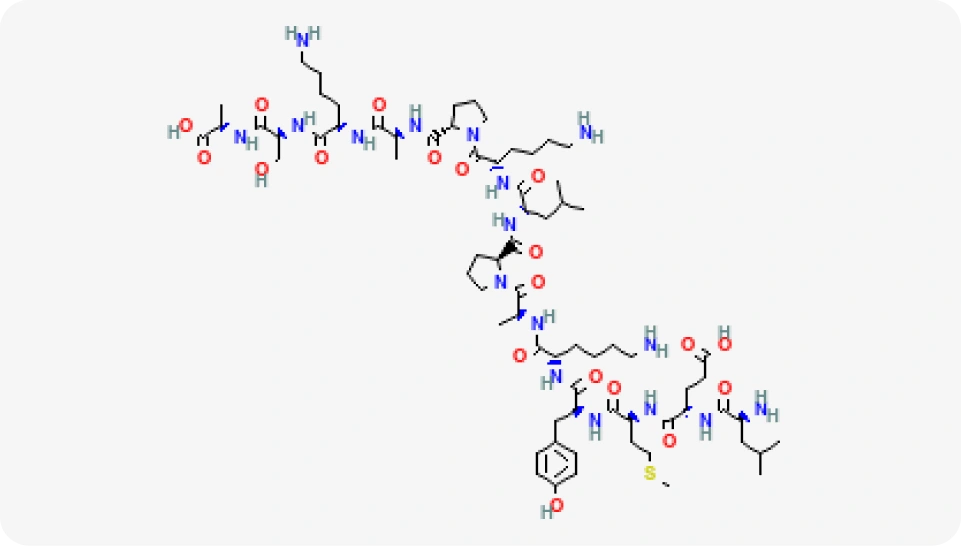
Modified IGF-1 analog with extended amino acid sequence and arginine substitution at position 3.
Certificates of Analysis
IGF-1 LR3 — 1mg
Research Findings
Research involving IGF-1 LR3 commonly focuses on:
| • IGF-1 receptor signaling: Studies examine activation of pathways involved in cellular growth and metabolism. |
| • Protein synthesis pathways: Research evaluates mTOR-related signaling and anabolic processes in cellular models. |
| • Cellular proliferation: Laboratory studies assess how IGF-1 LR3 influences cell growth and differentiation. |
| • Glucose metabolism: Investigations explore insulin-related biochemical pathways and nutrient uptake. |
| • Tissue growth models: Research examines its role in muscle and connective tissue signaling. |
| • Gene-expression modulation: Studies track transcriptional activity related to growth and metabolic regulation. |
| These findings are limited to laboratory research environments and do not represent clinical outcomes. |
These findings reflect laboratory experiments only and do not indicate clinical outcomes.
References
2. Growth Factor Research Institute. “IGF-1 analogs and cellular proliferation pathways.”
3. Metabolic Signaling Laboratory. “IGF-1 LR3 in glucose and protein synthesis models.”
4. Cellular Development Center. “Growth-factor signaling and gene-expression regulation.”
FAQ
Are GENIQ peptides pharmaceutical products?
No. They are not drugs, supplements, or therapeutic items. All compounds are provided strictly for laboratory research.
Who should purchase GENIQ research materials?
Qualified researchers, laboratories, and institutions working within applicable laws and regulations.
Do orders include COAs?
Yes. Each peptide includes a Certificate of Analysis confirming identity and purity testing when available for that lot.
What handling notes does GENIQ provide?
Only storage temperature and solvent-compatibility notes when listed on the product page. GENIQ does not provide guidance on preparation or application. Buyers follow their institution’s laboratory protocols.
Are these products for human use?
No. For Research Use Only — Not for Human Use. Not for human or animal consumption.
For Research Use Only — Not for Human Use
Sold exclusively as laboratory research materials. Not for human or animal consumption, clinical use, or household use.
Intended research use: Laboratory and in-vitro research, including analytical characterization and pathway / receptor-binding studies as applicable to this compound. Not for human consumption, clinical use, or diagnostic use on humans.
IGF-1 LR3 (Insulin-Like Growth Factor-1 Long R3) is a modified analog of IGF-1 engineered to exhibit increased stability and extended activity in laboratory research environments.
It differs from native IGF-1 by the addition of an arginine substitution at position 3 and an extended peptide chain, enhancing its resistance to binding proteins and degradation.