



Glutathione
Price range: $99.99 through $175.99Glutathione is a tripeptide composed of glutamic acid, cysteine, and glycine, naturally present in almost all living cells.
It is one of the most studied intracellular antioxidants and plays a central role in redox balance, detoxification processes, and cellular defense mechanisms.
In research settings, glutathione is used to examine oxidative stress responses, immune system-related pathways, cellular protection mechanisms, and biochemical interactions involving free radicals.
Ipamorelin — 10mg
$102.99Ipamorelin is a selective growth hormone secretagogue receptor (GHSR) agonist belonging to the class of pentapeptide secretagogues.
Researchers study this compound to understand its interaction with ghrelin receptors, its receptor-specific signaling activity, and its influence on pituitary somatotroph pathways.
GENIQ provides Ipamorelin strictly for laboratory research—not for human or animal use.
AOD-9604
Price range: $108.99 through $149.99AOD-9604 is a laboratory-designed peptide fragment derived from the 176–191 region of the human growth hormone (HGH) sequence.
It is studied for its interactions with metabolic signaling pathways and its potential influence on lipid-related biochemical activity.
This compound is provided exclusively for controlled scientific research and is not intended for human or animal use.
Pinealon — 20mg
$119.99Pinealon is a short regulatory tripeptide (Glu-Asp-Arg) studied for its role in cellular stress responses, neurobiological pathways, and age-related molecular processes.
It is commonly used in laboratory environments to explore how small peptides influence gene expression, antioxidant systems, and cellular protection mechanisms.
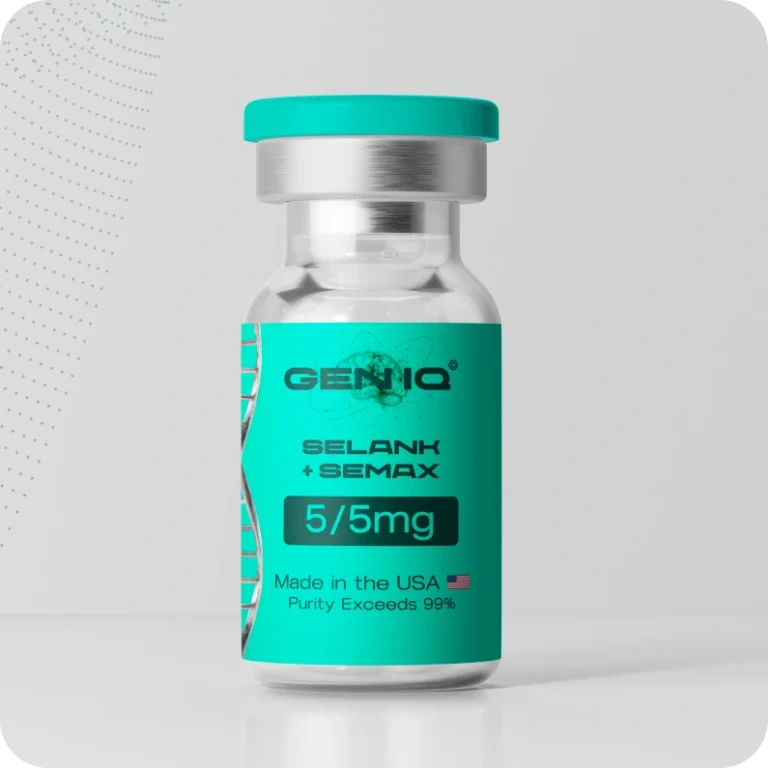
Selank + Semax (5/5mg)
$125.99Selank and Semax are synthetic neuroactive peptides commonly studied in neuroscience and molecular-biology research.
Selank is derived from the endogenous peptide tuftsin, while Semax is based on a fragment of adrenocorticotropic hormone (ACTH 4–10).
When combined in research environments, these peptides are evaluated for their complementary interactions within neurochemical signaling, stress-response pathways, and cognitive-function models.
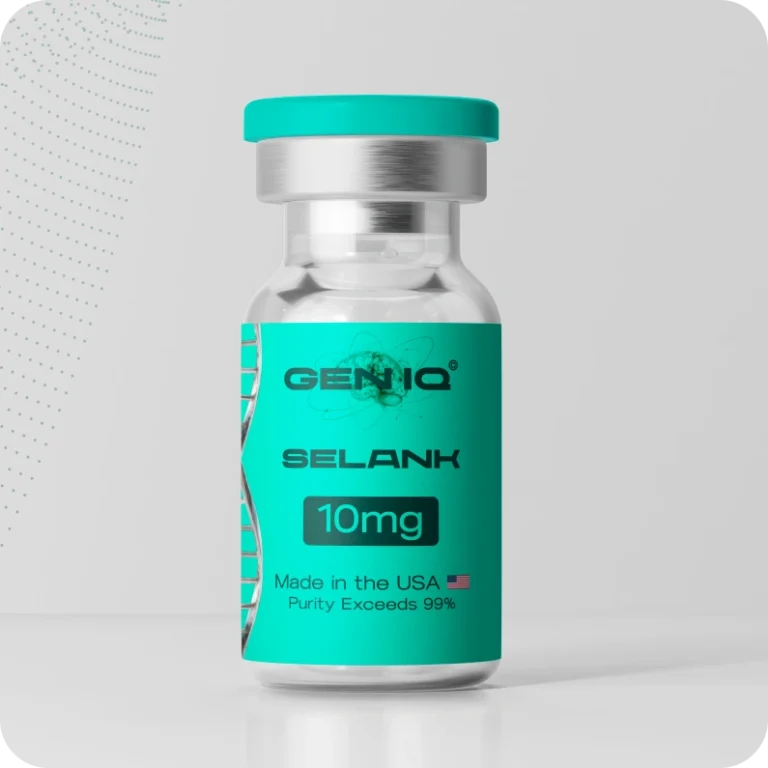
Selank — 10mg
$129.99Selank is a synthetic heptapeptide derived from the endogenous tetrapeptide tuftsin.
It is studied for its involvement in neurochemical signaling, stress-response pathways, memory-related biochemical models, and immune–nervous system interactions.
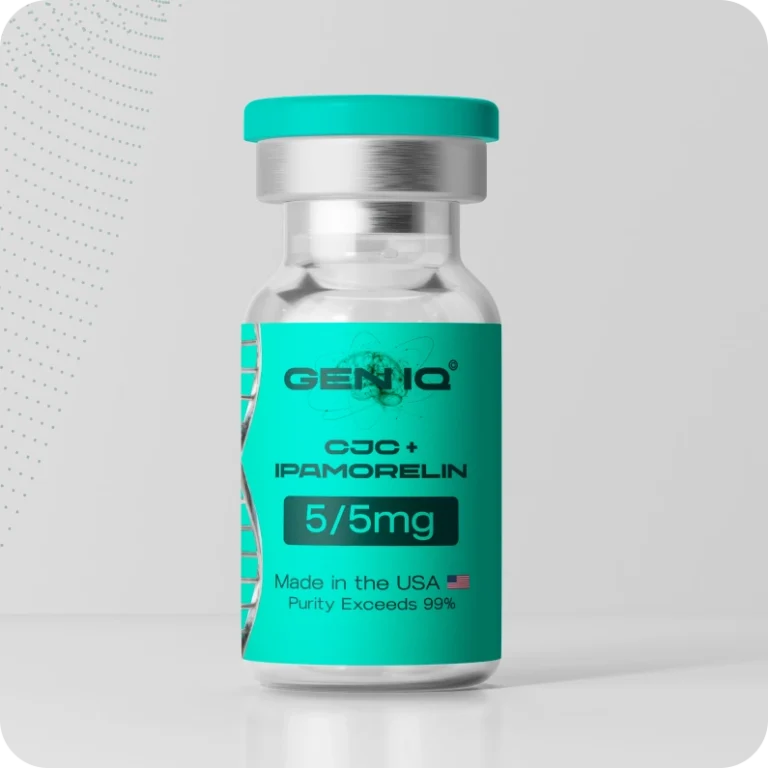
CJC-1295 (No DAC) / Ipamorelin
Price range: $139.99 through $199.99CJC-1295 (No DAC) / Ipamorelin is a dual-peptide research blend combining a modified growth hormone–releasing hormone analog (CJC-1295 No DAC) with a selective growth hormone secretagogue receptor peptide (Ipamorelin).
Researchers use this combination to study the interaction between GHRH-related signaling and ghrelin-receptor pathways under controlled laboratory conditions.
This compound is provided by GENIQ exclusively for scientific research and not for human or animal use.
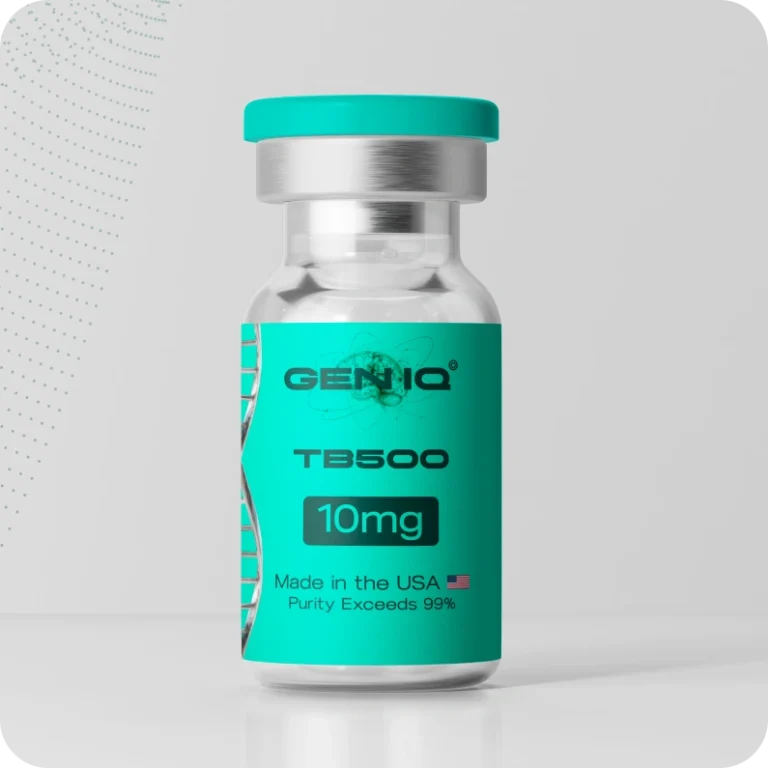
TB-500 — 10mg
$139.99TB-500 is a synthetic peptide fragment modeled after a naturally occurring protein known as Thymosin Beta-4 (Tβ4).
Researchers study TB-500 for its involvement in cellular repair models, actin-regulation pathways, angiogenesis-related processes, and tissue-responding biochemical mechanisms.
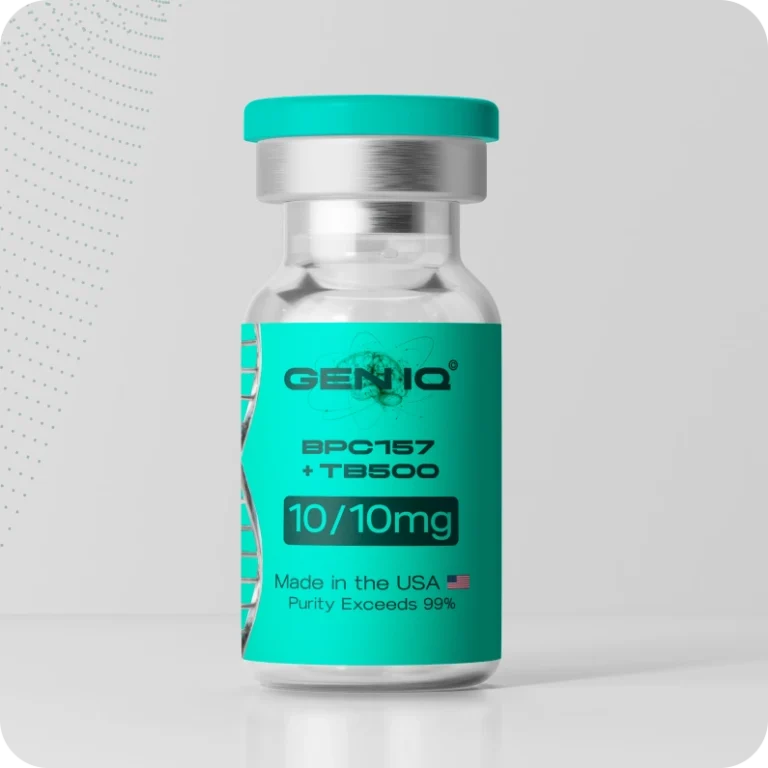
BPC-157 / TB-500
Price range: $149.99 through $199.99BPC-157 / TB-500 is a research peptide blend combining two widely studied compounds: BPC-157, a gastric-derived peptide fragment, and TB-500, a synthetic analog of thymosin beta-4 sequences.
Researchers study this combination for its potential influence on cellular repair dynamics, angiogenic pathways, inflammatory processes, and tissue-architecture regulation.
GENIQ supplies this peptide blend strictly for scientific research and not for human or animal use.
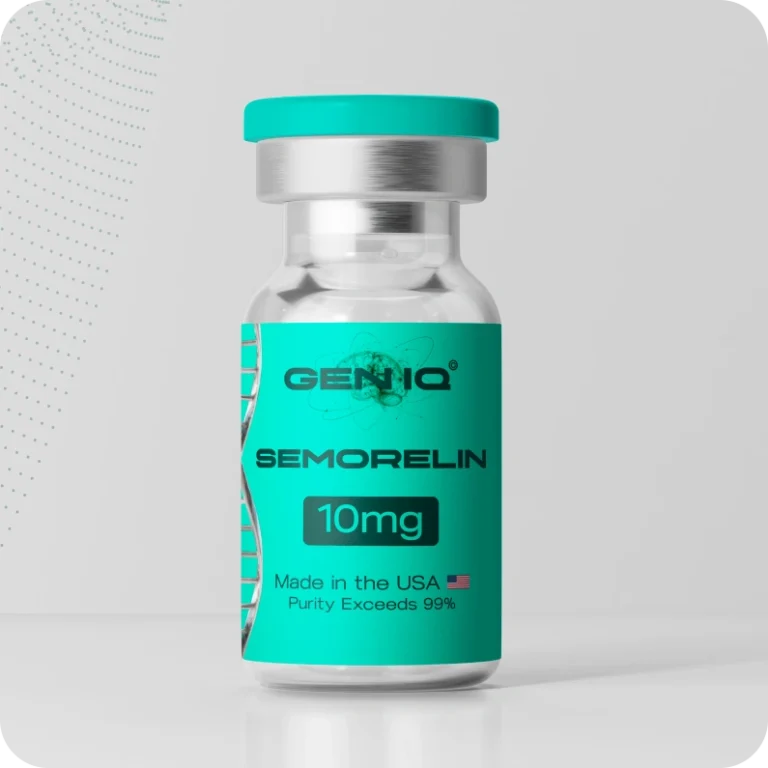
Sermorelin — 10mg
$149.99Sermorelin is a synthetic 29–amino acid fragment of Growth Hormone–Releasing Hormone (GHRH 1–29).
It is used in scientific research to study interactions with the pituitary GHRH receptor, growth-hormone–related pathways, and endocrine signaling mechanisms.
GENIQ supplies Sermorelin exclusively for laboratory research—not for human or animal administration.
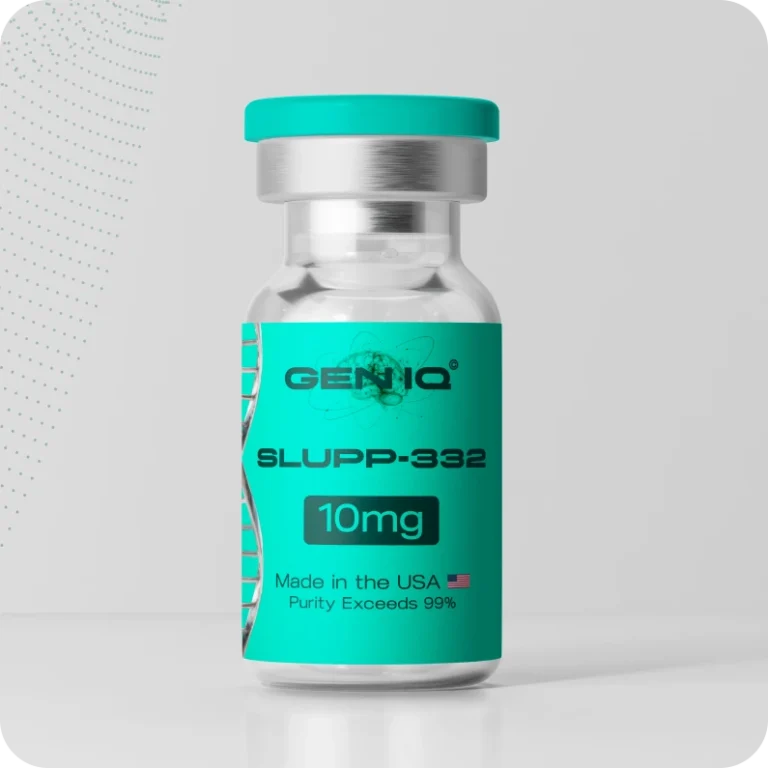
SLUPP-332 — 10mg
$149.99SLUPP-332 is a synthetic small-molecule research compound studied for its role in metabolic regulation and nuclear receptor signaling pathways. It is associated with the activation of estrogen-related receptors (ERRs), which are involved in cellular energy metabolism and mitochondrial function.
Researchers evaluate SLUPP-332 in laboratory settings to understand how nuclear receptor modulation influences energy utilization, endurance-related signaling, and metabolic efficiency.
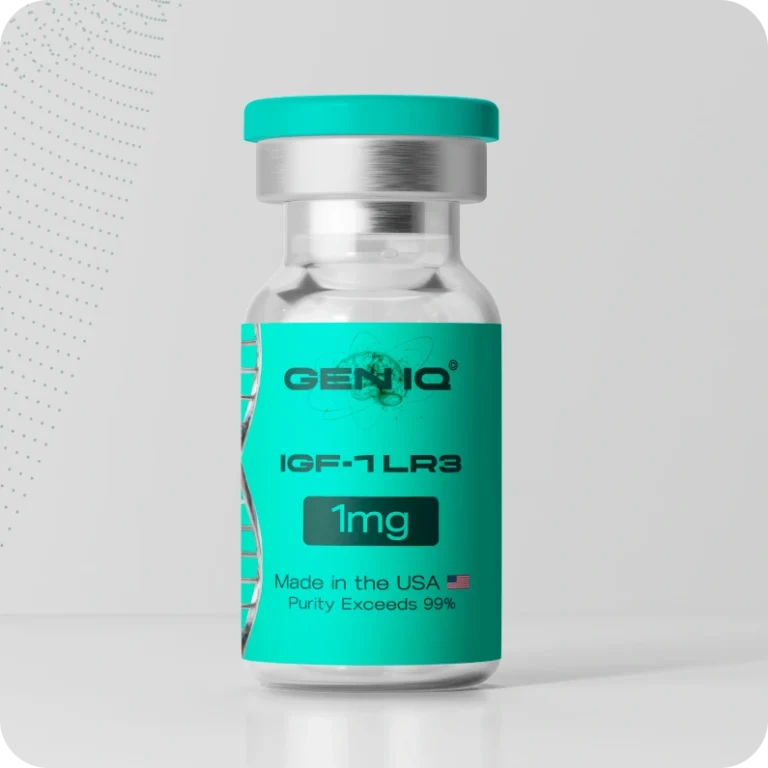
IGF-1 LR3 — 1mg
$149.99IGF-1 LR3 (Insulin-Like Growth Factor-1 Long R3) is a modified analog of IGF-1 engineered to exhibit increased stability and extended activity in laboratory research environments.
It differs from native IGF-1 by the addition of an arginine substitution at position 3 and an extended peptide chain, enhancing its resistance to binding proteins and degradation.