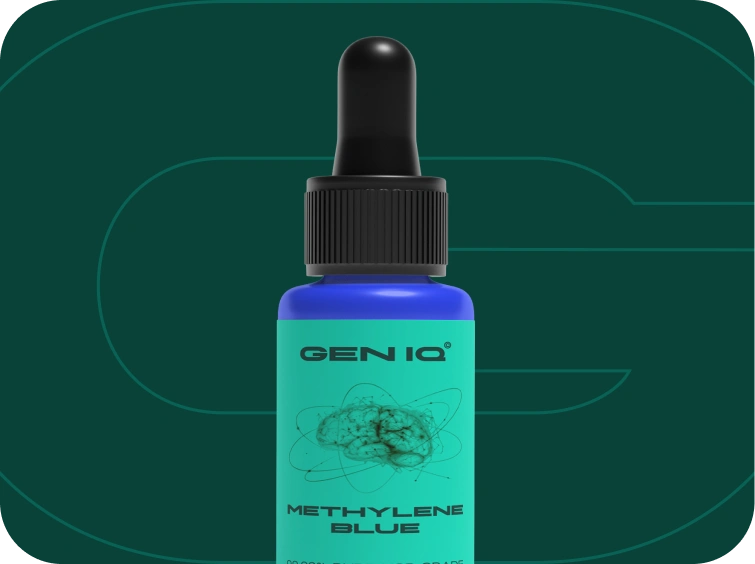
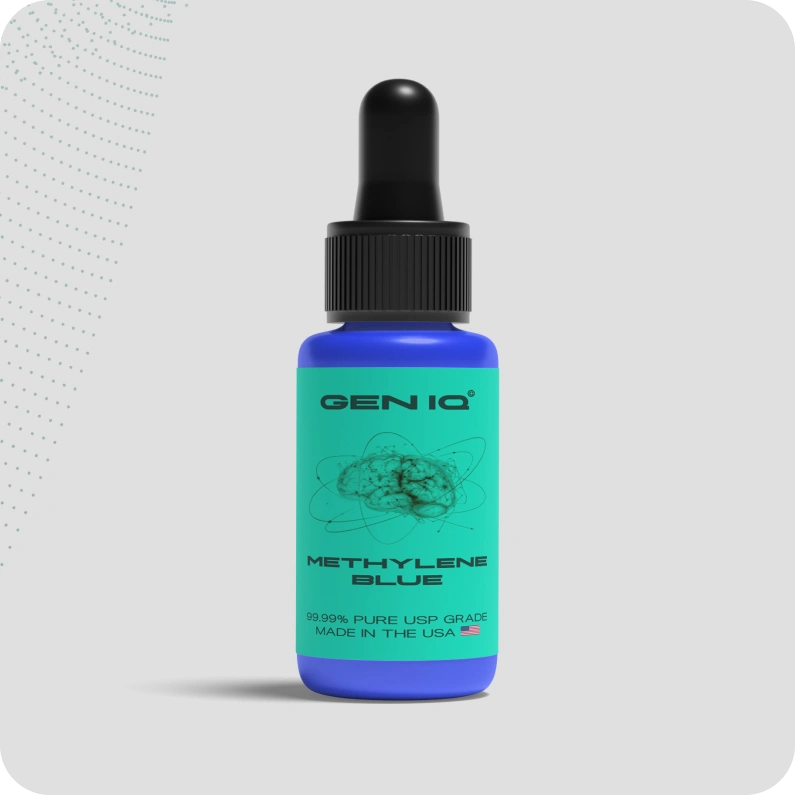



Methylene Blue — 99.99% USP Grade

Methylene Blue (methylthioninium chloride) is a synthetic heterocyclic aromatic compound widely used in biochemical, microbiological, and redox-biology research.


It is studied for its electron-transfer properties, mitochondrial interaction behavior, and role in cellular oxidation-reduction models.

$34.99

Category:
  • Official retailer
  • Quality guaranteed
  • Free delivery from $99
  • Free returns is available

What Is Methylene Blue?

Methylene Blue (methylthioninium chloride) is a synthetic heterocyclic aromatic compound widely used in biochemical, microbiological, and redox-biology research.

It is studied for its electron-transfer properties, mitochondrial interaction behavior, and role in cellular oxidation-reduction models.

GENIQ supplies Methylene Blue strictly for laboratory research only—not for human or animal use.

Compound Overview

Methylene Blue functions as a reversible redox agent capable of cycling between oxidized and reduced forms.

In laboratory research, it is commonly used to explore how redox-active compounds influence cellular energy systems and biochemical stability.

Researchers evaluate how Methylene Blue may promote changes in:

• Electron-transport chain behavior
• Cellular oxygen utilization
• Redox balance and oxidative-stress pathways
• Mitochondrial respiration models
• Cellular signaling under metabolic stress
• Enzyme-catalyzed electron transfer
• Dye-based molecular labeling and tracing
All observations originate from controlled laboratory environments.

All findings remain limited to preclinical and in-vitro experimental environments.

History of Methylene Blue

Methylene Blue was first synthesized in the late 1800s and became one of the earliest synthetic compounds used in biological science.

Initially used as a dye, it was later found to interact strongly with cellular redox systems and mitochondrial enzymes.

Over time, it became widely adopted in research involving:

• Cellular respiration
• Oxidative and reductive biochemistry
• Microbiology and staining techniques
• Mitochondrial metabolism
• Enzyme kinetics and redox cycling
• Neurochemical and metabolic pathway research
Its unique electron-shuttling behavior makes it one of the most studied redox-active compounds in laboratory science.

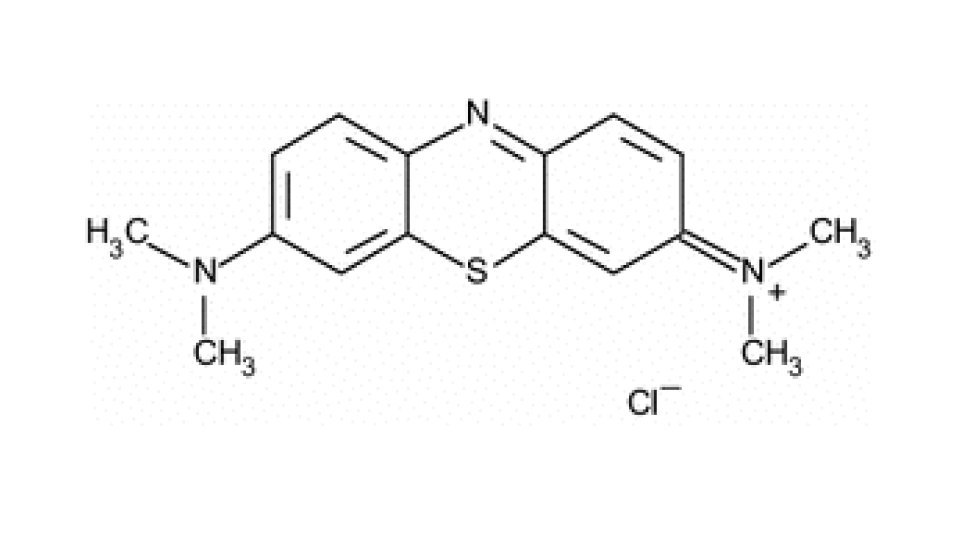
Molecular Structure

Chemical Name: Methylthioninium chloride Molecular Formula: C₁₆H₁₈ClN₃S

Research Findings

Methylene Blue is widely used in research exploring:

• Mitochondrial respiration: Studies evaluate how redox-cycling molecules influence ATP-generation pathways.
• Electron-transfer reactions: Research tracks how Methylene Blue acts as an electron carrier in enzymatic systems.
• Oxidative-stress models: It is used to study reactive oxygen species and redox balance.
• Neurochemical pathways: Laboratory models explore its interaction with neuronal metabolic processes.
• Cellular energy regulation: Investigations examine its effect on mitochondrial efficiency under stress conditions.
• Microbial and cellular staining: Methylene Blue remains a standard tool for visualizing biological structures.
These findings are limited to laboratory and experimental models.

These findings reflect laboratory experiments only and do not indicate clinical outcomes.

References

1. Rojas J., et al. “Redox-active compounds and mitochondrial electron transfer.” Journal of Cellular Bioenergetics.

2. Metabolic Pathways Institute. “Methylene Blue in oxidative-reduction research.”

3. Mitochondrial Research Center. “Electron-shuttling molecules and ATP-production models.”

4. Biochemical Methods Laboratory. “Applications of Methylene Blue in cellular staining and redox analysis.”

FAQ

What type of research is Methylene Blue used for?

It is commonly used in studies involving mitochondrial respiration, redox chemistry, cellular energy pathways, and microbiological staining.

Yes. Every GENIQ research compound includes a COA verifying identity and purity.

No. This compound is not approved for human or animal administration when sold by GENIQ.

No. GENIQ does not provide any preparation or application guidance.

Only trained laboratory professionals operating within controlled scientific environments.

Research Use Only

All GENIQ compounds are intended strictly for laboratory research.
 Not for human or animal consumption, medical use, or therapeutic application.

Nothing in this document should be interpreted as medical advice or as approval for use outside controlled scientific environments.

Methylene Blue (methylthioninium chloride) is a synthetic heterocyclic aromatic compound widely used in biochemical, microbiological, and redox-biology research.


It is studied for its electron-transfer properties, mitochondrial interaction behavior, and role in cellular oxidation-reduction models.

Reviews

There are no reviews yet.

Only logged in customers who have purchased this product may leave a review.