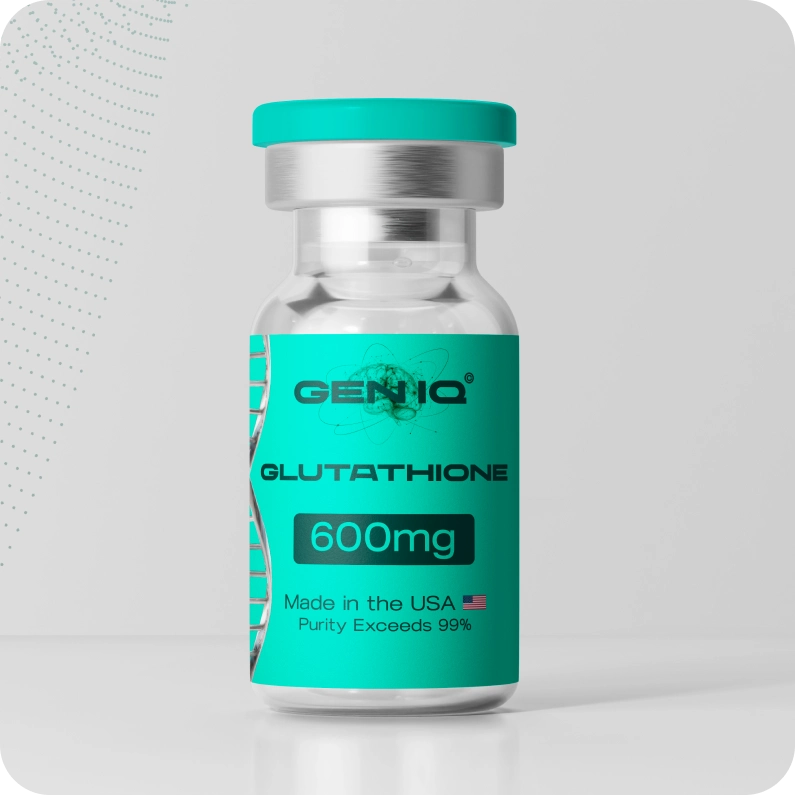
Glutathione
For Research Use Only — Not for Human Use
Intended for laboratory research use only (e.g., analytical and in-vitro studies). Not for human use.
Glutathione is a tripeptide composed of glutamic acid, cysteine, and glycine, naturally present in almost all living cells.
It is one of the most studied intracellular antioxidants and plays a central role in redox balance, detoxification processes, and cellular defense mechanisms.
In research settings, glutathione is used to examine oxidative stress responses, immune system-related pathways, cellular protection mechanisms, and biochemical interactions involving free radicals.
$99.99 – $175.99Price range: $99.99 through $175.99

-
 Official retailer
 -
Quality guaranteed

-
Free delivery from $99
-
Free returns is available
What Is Glutathione?
Glutathione is a tripeptide composed of glutamic acid, cysteine, and glycine, naturally present in nearly all living cells.
It is one of the most widely studied intracellular antioxidants and plays a central role in redox balance, detoxification processes, and cellular defense mechanisms.
In research environments, Glutathione is used to examine oxidative-stress responses, immune-related pathways, cellular protection mechanisms, and biochemical interactions involving free radicals.
GENIQ supplies Glutathione exclusively for laboratory research and not for human or animal use.
Peptide Overview
Glutathione is essential for maintaining normal cellular function and is studied in a broad range of biological models.
Research often explores how Glutathione may promote changes in:
| • Antioxidant defense and redox balance |
| • Detoxification pathways involving reactive oxygen species |
| • Enzyme-assisted metabolic regulation (via GSH-dependent enzymes) |
| • Immune response modulation |
| • Mitochondrial processes and cellular protection mechanisms |
| • Protein and DNA integrity in oxidative environments |
| These observations come strictly from laboratory and biochemical research models. |
All findings remain limited to preclinical and in-vitro experimental environments.
History of Glutathione
Glutathione was first identified in the early 20th century by Frederick Gowland Hopkins, who recognized its importance in biological systems.
Over subsequent decades, scientists established Glutathione as one of the most critical intracellular antioxidants, responsible for protecting DNA, proteins, lipids, and cellular structures from oxidative damage.
Its role in detoxification, enzymatic reactions, and redox homeostasis led to extensive exploration in fields such as:
| • Cellular aging |
| • Toxicology |
| • Immune biology |
| • Mitochondrial research |
| • Oxidative stress and inflammation models |
| Today, Glutathione remains essential in experimental environments studying oxidative biochemistry and cell-protection mechanisms. |
Peptide Structure
Sequence: Glu-Cys-Gly
Certificates of Analysis
Glutathione — 600mg
Research Findings
Scientific models involving Glutathione commonly highlight:
| • Oxidative stress protection: Glutathione is a primary defense molecule studied for its ability to interact with free radicals and reactive oxygen species. |
| • Detoxification systems: Researchers evaluate how Glutathione participates in conjugation reactions supporting detoxification and metabolic clearance. |
| • Immune-related pathways: Studies explore Glutathione’s influence on immune signaling and regulation of inflammatory mediators. |
| • Mitochondrial integrity: Many experiments examine how Glutathione contributes to maintaining mitochondrial structure and function. |
| • Redox homeostasis: Research focuses on Glutathione’s role in maintaining stable cellular redox conditions and protecting biomolecules from oxidative damage. |
| These insights reflect controlled laboratory observations only. |
These findings reflect laboratory experiments only and do not indicate clinical outcomes.
References
2. Dickinson D., et al. “Oxidative stress modulation by Glutathione in vitro.” Cellular Antioxidant Research.
3. Mitochondrial Biology Group. “Glutathione involvement in mitochondrial redox regulation.”
4. Toxicology Research Consortium. “Glutathione pathways in detoxification mechanisms.”
FAQ
Are GENIQ peptides pharmaceutical products?
No. They are not drugs, supplements, or therapeutic items. All compounds are provided strictly for laboratory research.
Who should purchase GENIQ research materials?
Qualified researchers, laboratories, and institutions working within applicable laws and regulations.
Do orders include COAs?
Yes. Each peptide includes a Certificate of Analysis confirming identity and purity testing when available for that lot.
What handling notes does GENIQ provide?
Only storage temperature and solvent-compatibility notes when listed on the product page. GENIQ does not provide guidance on preparation or application. Buyers follow their institution’s laboratory protocols.
Are these products for human use?
No. For Research Use Only — Not for Human Use. Not for human or animal consumption.
For Research Use Only — Not for Human Use
Sold exclusively as laboratory research materials. Not for human or animal consumption, clinical use, or household use.
Intended research use: Laboratory and in-vitro research, including analytical characterization and pathway / receptor-binding studies as applicable to this compound. Not for human consumption, clinical use, or diagnostic use on humans.
Glutathione is a tripeptide composed of glutamic acid, cysteine, and glycine, naturally present in almost all living cells.
It is one of the most studied intracellular antioxidants and plays a central role in redox balance, detoxification processes, and cellular defense mechanisms.
In research settings, glutathione is used to examine oxidative stress responses, immune system-related pathways, cellular protection mechanisms, and biochemical interactions involving free radicals.
| Size |
600mg ,1500mg |
|---|
RELATED PRODUCTS