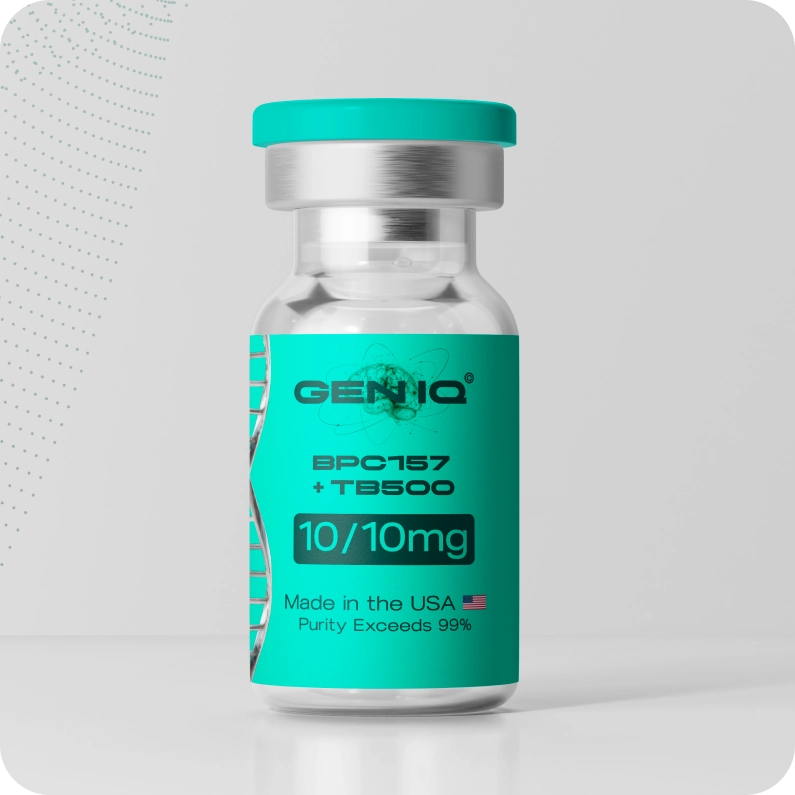
BPC-157 / TB-500
For Research Use Only — Not for Human Use
Intended for laboratory research use only (e.g., analytical and in-vitro studies). Not for human use.
BPC-157 / TB-500 is a research peptide blend combining two widely studied compounds: BPC-157, a gastric-derived peptide fragment, and TB-500, a synthetic analog of thymosin beta-4 sequences.
Researchers study this combination for its potential influence on cellular repair dynamics, angiogenic pathways, inflammatory processes, and tissue-architecture regulation.
GENIQ supplies this peptide blend strictly for scientific research and not for human or animal use.
$149.99 – $199.99Price range: $149.99 through $199.99

-
 Official retailer
 -
Quality guaranteed

-
Free delivery from $99
-
Free returns is available
What Is BPC-157 / TB-500?
BPC-157 / TB-500 is a research peptide blend combining two widely studied compounds: BPC-157, a gastric-derived peptide fragment, and TB-500, a synthetic analog of thymosin beta-4 sequences.
Researchers study this combination for its potential influence on cellular repair dynamics, angiogenic pathways, inflammatory processes, and tissue-architecture regulation.
GENIQ supplies this peptide blend strictly for scientific research and not for human or animal use.
Peptide Overview
This blend merges the experimental properties of two distinct peptides:
BPC-157: A 15-amino-acid peptide fragment examined for its role in cellular migration, inflammatory signaling, and vascular regulation.
TB-500 (Thymosin Beta-4 Fragment): A peptide sequence modeled after a region of thymosin beta-4, commonly studied for its association with cytoskeletal organization, angiogenesis pathways, and tissue repair behavior in controlled experimental settings.In research environments, the pairing of these two peptides is often used to explore how they may promote changes in:
| Cellular remodeling mechanisms |
| Endothelial and vascular responses |
| Inflammation-related signaling |
| Structural remodeling processes in tissue models |
| These interactions are based solely on laboratory observations, not clinical outcomes. |
All findings remain limited to preclinical and in-vitro experimental environments.
History of BPC-157 / TB-500
BPC-157 was discovered through studies on gastric protective proteins and isolated due to its observed influence on tissue-regulation signaling.
TB-500 originates from research on thymosin beta-4, a naturally occurring protein associated with wound-healing coordination and regenerative processes at the cellular level.
As peptide science advanced, researchers began combining both fragments to investigate potential complementary effects in preclinical tissue studies.
The blend became widely used in research models evaluating complex interactions between inflammatory mediators, angiogenic factors, and cellular structural repair pathways.
This combined peptide continues to serve as a research tool only.
Peptide Structure
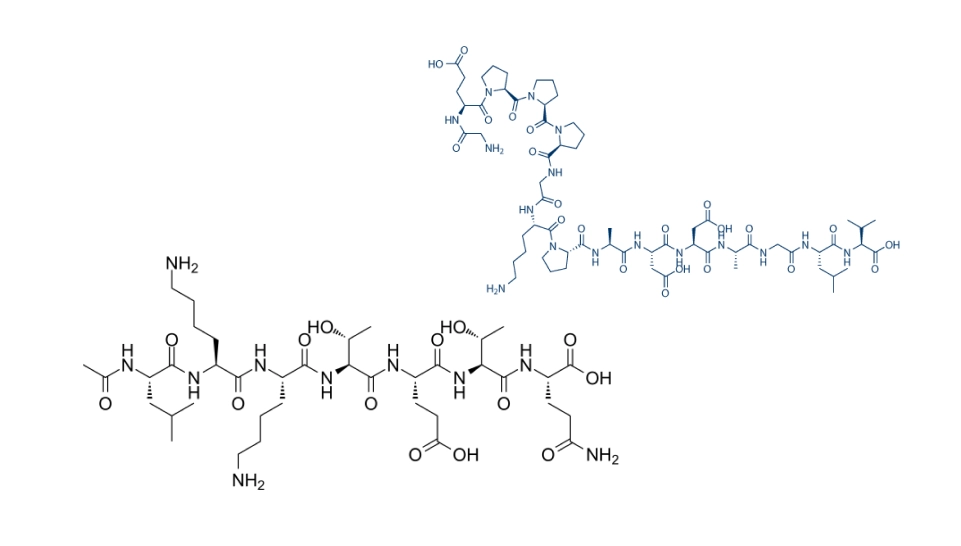
BPC-157 Sequence: Gly-Glu-Pro-Pro-Pro-Gly-Lys-Pro-Ala-Asp-Asp-Ala-Gly-LeuTB-500 (Fragment) Sequence: Ac-Ser-Asp-Lys-Pro-Asp-Met-Ala-Glu-Ile-Glu-Lys-Phe-Asp-Lys-Ser-Lys
Certificates of Analysis
BPC-157 / TB-500 (10mg / 10mg)
Research Findings
Research models exploring the combined activity of BPC-157 and TB-500 frequently focus on:
| Angiogenic pathways: Examining the impact on endothelial cell behavior and blood-vessel formation processes. |
| Inflammatory signaling: Studying how the peptides may influence inflammatory mediators and tissue communication in controlled assays. |
| Cellular migration & repair mechanisms: Reviewing how fibroblasts, muscle cells, or structural proteins respond in vitro. |
| Extracellular matrix interactions: Investigating changes in cytoskeletal dynamics and tissue framework remodeling. |
| These findings reflect controlled laboratory data only and do not indicate therapeutic or clinical functionality. |
These findings reflect laboratory experiments only and do not indicate clinical outcomes.
References
2. Chang C. H., et al. “Evaluation of TB-500 fragment activity on cytoskeletal and angiogenic response.” Peptide Science Review.
FAQ
Are GENIQ peptides pharmaceutical products?
No. They are not drugs, supplements, or therapeutic items. All compounds are provided strictly for laboratory research.
Who should purchase GENIQ research materials?
Qualified researchers, laboratories, and institutions working within applicable laws and regulations.
Do orders include COAs?
Yes. Each peptide includes a Certificate of Analysis confirming identity and purity testing when available for that lot.
What handling notes does GENIQ provide?
Only storage temperature and solvent-compatibility notes when listed on the product page. GENIQ does not provide guidance on preparation or application. Buyers follow their institution’s laboratory protocols.
Are these products for human use?
No. For Research Use Only — Not for Human Use. Not for human or animal consumption.
For Research Use Only — Not for Human Use
Sold exclusively as laboratory research materials. Not for human or animal consumption, clinical use, or household use.
Intended research use: Laboratory and in-vitro research, including analytical characterization and pathway / receptor-binding studies as applicable to this compound. Not for human consumption, clinical use, or diagnostic use on humans.
BPC-157 / TB-500 is a research peptide blend combining two widely studied compounds: BPC-157, a gastric-derived peptide fragment, and TB-500, a synthetic analog of thymosin beta-4 sequences.
Researchers study this combination for its potential influence on cellular repair dynamics, angiogenic pathways, inflammatory processes, and tissue-architecture regulation.
GENIQ supplies this peptide blend strictly for scientific research and not for human or animal use.
| Size |
10mg / 10mg ,15mg / 15mg |
|---|